



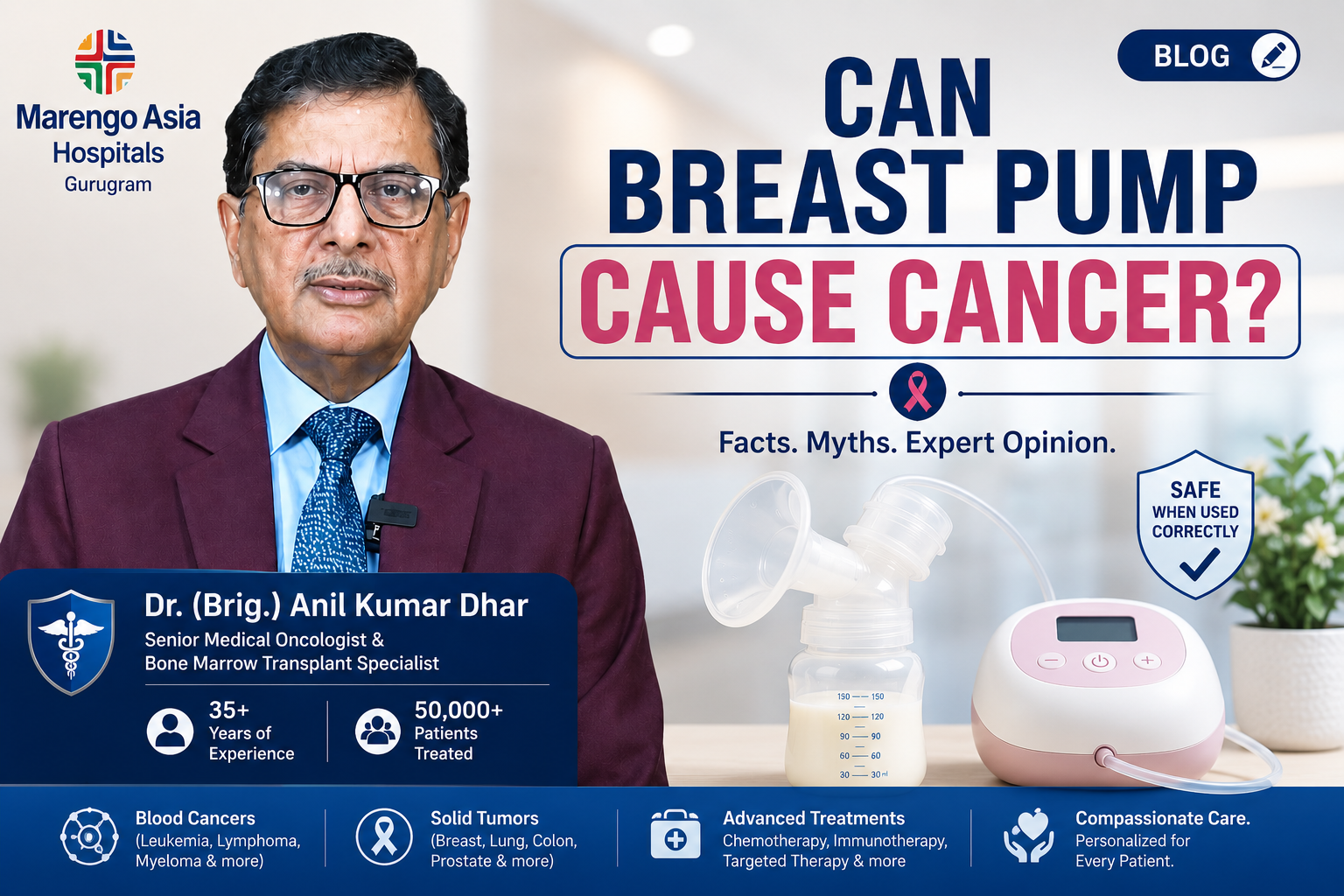
One of the most common questions I hear from new mothers in my clinic is, “Can Breast Pump Cause Cancer?” It is a completely understandable concern. Pregnancy, childbirth, and breastfeeding bring significant changes to the breasts, and when mothers experience pain, swelling, or discomfort while using a breast pump, it is natural to worry whether these changes could be linked to something more serious, such as breast cancer. Unfortunately, misinformation shared on social media and unverified online sources has only added to this fear.
Let me reassure you with the facts: the answer to “Can Breast Pump Cause Cancer” is no. There is no scientific evidence to suggest that using a breast pump increases the risk of developing breast cancer. Leading health organizations, including the World Health Organization (WHO) and the American Cancer Society (ACS), do not list breast pump use as a risk factor for breast cancer. Instead, established risk factors include increasing age, inherited genetic mutations such as BRCA1 and BRCA2, hormonal influences, obesity after menopause, alcohol consumption, and family history.
Many mothers confuse temporary breast discomfort caused by breastfeeding or pumping with signs of cancer. Conditions such as breast engorgement, blocked milk ducts, nipple soreness, or mastitis are relatively common during breastfeeding and can cause pain or lumps. However, these conditions are not cancer, and in most cases, they improve with proper breastfeeding techniques or medical treatment. This misunderstanding is one of the main reasons why the question “Can Breast Pump Cause Cancer” continues to circulate.
As a Senior Medical Oncologist, I believe that replacing myths with evidence-based information is essential. Knowing the facts not only reduces unnecessary anxiety but also helps women recognize the symptoms that genuinely require medical attention. Equally important, research has shown that breastfeeding itself may lower a woman’s lifetime risk of developing breast cancer, making it beneficial for both mother and baby.
In this article, I will answer the question “Can Breast Pump Cause Cancer” using current medical evidence. We will discuss how breast pumps work, why this myth persists, the common side effects of pumping, breast conditions that can mimic cancer, warning signs you should never ignore, and practical tips for maintaining good breast health. My goal is to help you make informed decisions based on science—not fear—so you can focus on your health and your baby’s well-being with confidence.
What Is a Breast Pump?
Before we answer the question, “Can Breast Pump Cause Cancer?”, it is important to understand what a breast pump is and how it works. In my practice, I often meet new mothers who are anxious about using a breast pump because they have heard myths suggesting it may harm breast tissue. Understanding the purpose of a breast pump can help separate facts from misconceptions and answer the common concern: Can Breast Pump Cause Cancer?
A breast pump is a medical device designed to help mothers express breast milk when direct breastfeeding is difficult or not possible. It works by creating gentle suction that mimics a baby’s natural sucking action, allowing milk to flow from the breast without damaging healthy breast tissue. Millions of women worldwide safely use breast pumps every year, and there is no scientific evidence that answers “Can Breast Pump Cause Cancer?” with a yes. On the contrary, breast pumps are widely recommended by healthcare professionals to support successful breastfeeding.
There are three main types of breast pumps, each designed to meet different needs:
- Manual Breast Pumps: Operated by hand, these pumps are lightweight, affordable, and suitable for occasional use.
- Electric Breast Pumps: Powered by electricity or rechargeable batteries, these pumps provide consistent suction and are ideal for mothers who pump frequently or return to work.
- Wearable Breast Pumps: Compact and hands-free, wearable pumps fit inside a bra, allowing mothers to express milk discreetly while carrying out daily activities.
The Centers for Disease Control and Prevention (CDC) and breastfeeding experts recommend breast pumps as valuable tools for mothers who have premature babies, infants with latching difficulties, low milk supply, or work commitments that make direct breastfeeding challenging. Pumping also helps maintain milk production and provides breast milk even when the mother and baby are temporarily separated.
Many mothers wonder, “Can Breast Pump Cause Cancer?”, particularly if they experience temporary soreness after pumping. In reality, a correctly fitted breast pump uses controlled, gentle suction that stimulates milk release without causing cancer. If the suction is set too high or the flange size is incorrect, mothers may experience nipple soreness, skin irritation, or breast tenderness. These are common breastfeeding-related issues and are not linked to breast cancer.
As a Medical Oncologist, I reassure my patients that breast pumps are safe when used correctly. Understanding how they function is the first step toward dispelling myths surrounding “Can Breast Pump Cause Cancer.” In the next section, we’ll examine the scientific evidence and explain why medical research consistently shows that breast pumps do not increase the risk of breast cancer.
Also Read: How Much Does Cancer Treatment Cost in India
Can Breast Pump Cause Cancer? The Medical Answer
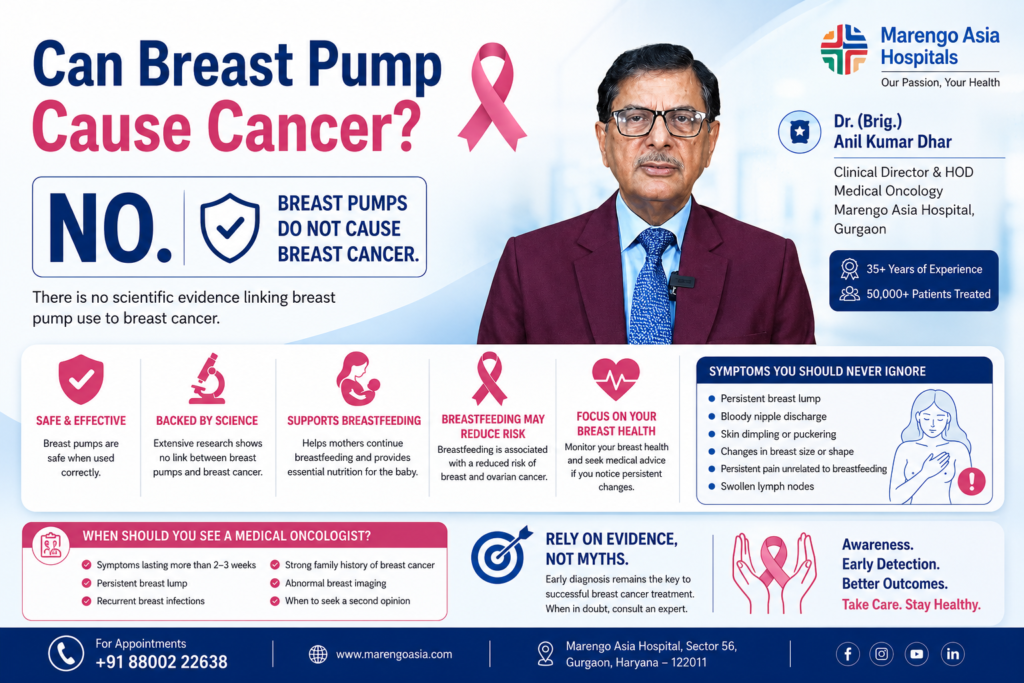
As a Medical Oncologist, one of the questions I frequently receive from breastfeeding mothers is, “Can Breast Pump Cause Cancer?” My answer is always based on scientific evidence rather than myths or assumptions. Simply put, the answer is no. There is no medical or scientific evidence to show that using a breast pump increases the risk of breast cancer. Despite the widespread concern, years of research have consistently demonstrated that Can Breast Pump Cause Cancer is a myth—not a medical fact.
Breast cancer develops when normal breast cells undergo genetic mutations that cause them to grow uncontrollably. These mutations are influenced by factors such as age, family history, inherited gene mutations (BRCA1 and BRCA2), hormonal exposure, obesity after menopause, alcohol consumption, and previous radiation exposure. A breast pump does not alter DNA, damage breast cells in a way that causes cancer, or trigger these genetic changes. Therefore, asking “Can Breast Pump Cause Cancer?” should be met with reassurance backed by evidence rather than fear.
Research from leading organizations, including the American Cancer Society (ACS), the World Health Organization (WHO), and the Centers for Disease Control and Prevention (CDC), does not identify breast pump use as a risk factor for breast cancer. In fact, global health authorities actively encourage breastfeeding, and breast pumps are considered an important tool that helps mothers continue providing breast milk when direct feeding is difficult. According to the WHO, increasing breastfeeding rates worldwide could prevent thousands of child deaths every year while also providing long-term health benefits for mothers. Several large studies have also shown that breastfeeding can reduce a woman’s lifetime risk of breast cancer by approximately 4–5% for every 12 months of breastfeeding, in addition to the protection associated with each childbirth.
So why do some women believe Can Breast Pump Cause Cancer might be true? The answer often lies in temporary breast changes that occur during breastfeeding. An incorrectly fitted breast pump or excessive suction may lead to nipple soreness, breast tenderness, mild swelling, skin irritation, or blocked milk ducts. While these conditions can be uncomfortable, they are not cancer. They are usually temporary and improve with proper pumping technique, correct flange size, adequate breast emptying, or simple medical treatment if an infection develops.
One important distinction every mother should understand is the difference between temporary discomfort and cancer. Breastfeeding-related pain generally develops suddenly, often affects both breasts or the nipple, and improves within a few days after correcting the underlying issue. Breast cancer, however, usually presents as a persistent lump, skin dimpling, nipple inversion, bloody nipple discharge, or changes in the breast that do not resolve over time. These symptoms deserve prompt medical evaluation, regardless of whether you are breastfeeding or using a breast pump.
As I tell my patients, the question should not simply be “Can Breast Pump Cause Cancer?” but rather “Am I aware of the warning signs that truly require medical attention?” Understanding this difference can prevent unnecessary anxiety while ensuring that genuine breast health concerns are never ignored. In the next section, we’ll explore why this misconception continues to spread and examine the common myths that have led many mothers to question whether Can Breast Pump Cause Cancer is possible.
Also Read: Is Blood Cancer Curable in India?
Why Do Some Women Think a Breast Pump Can Cause Cancer?
As we have already discussed, the scientific evidence clearly answers “Can Breast Pump Cause Cancer?” with a firm no. Yet, this question continues to worry many mothers. In my clinical practice, I often find that these fears are not based on medical evidence but on temporary breast changes experienced during breastfeeding and the spread of misinformation online. Understanding why this misconception exists is important to help mothers make informed decisions instead of living with unnecessary anxiety.
One of the biggest reasons women ask “Can Breast Pump Cause Cancer?” is because they experience pain after pumping. Breastfeeding is a learning process, and using a breast pump with excessive suction or an incorrectly sized flange can cause temporary nipple soreness, breast tenderness, or mild bruising. While these symptoms can be uncomfortable, they do not indicate cancer. In most cases, adjusting the pump settings or using the correct breast shield size resolves the problem within a few days.
Another common concern is breast engorgement, which occurs when the breasts become overly full of milk. Engorged breasts may feel hard, swollen, warm, and tender, sometimes making mothers believe they have developed a dangerous lump. Similarly, blocked milk ducts can create small, localized lumps that are often mistaken for tumors. Fortunately, these lumps are usually related to milk accumulation rather than abnormal cell growth and often improve with regular breastfeeding, pumping, gentle massage, and warm compresses.
Mastitis, a bacterial infection of the breast tissue, is another condition that contributes to the misconception surrounding “Can Breast Pump Cause Cancer?” Mastitis affects approximately 10–20% of breastfeeding women and can cause redness, swelling, fever, breast pain, and tenderness. Although these symptoms can be alarming, mastitis is an infection—not cancer—and generally responds well to antibiotics and continued breast emptying under medical guidance.
The rise of social media has unfortunately amplified many health myths. Personal experiences, misleading videos, and unverified health advice often spread much faster than evidence-based medical information. A mother who develops a breast lump while breastfeeding may wrongly assume that the breast pump caused it, even though the lump may actually be due to a blocked duct, mastitis, or another benign condition. This confusion keeps the question “Can Breast Pump Cause Cancer?” circulating despite decades of research proving otherwise.
Let’s separate myth from fact:
- Myth: Breast pump suction damages breast tissue and causes cancer.
Fact: Breast pumps only create gentle suction to express milk and do not cause the genetic mutations responsible for breast cancer. - Myth: Pain after pumping is a sign of cancer.
Fact: Temporary soreness is usually caused by improper pump settings, incorrect flange size, or breastfeeding-related issues—not cancer. - Myth: Every breast lump during breastfeeding is cancer.
Fact: Most breastfeeding-related lumps are caused by blocked ducts, engorgement, or infection. However, any lump that persists after appropriate treatment should always be evaluated by a doctor.
As a Medical Oncologist, I encourage every mother to seek information from trusted healthcare professionals rather than relying on internet myths. The question “Can Breast Pump Cause Cancer?” has been thoroughly studied, and the evidence remains reassuring. Knowing the difference between normal breastfeeding-related changes and genuine warning signs empowers women to care for their breast health with confidence while ensuring that serious conditions are identified early if they do occur.
Also Read: Can Stage 1 Cancer Be Cured? – Dr. (Brig.) AK Dhar
Can Breast Pump Cause Cancer by Damaging Breast Tissue?
One of the most persistent myths I hear from new mothers is whether Can Breast Pump Cause Cancer by damaging the breast tissue. The concern is understandable—after all, a breast pump applies suction to the breast, and if it causes discomfort, it may seem logical to wonder whether repeated use could lead to something more serious. However, based on decades of medical research and clinical experience, I can confidently say that the answer is no. There is no scientific evidence to suggest that breast pumps damage breast tissue in a way that causes breast cancer.
To understand why, it helps to know how the breast naturally functions during breastfeeding. The breast is made up of milk-producing glands (lobules), milk ducts, fatty tissue, connective tissue, blood vessels, and nerves. During pregnancy and after childbirth, hormones such as prolactin and oxytocin prepare the breasts for milk production and release. A breast pump simply mimics a baby’s natural sucking pattern by creating controlled, gentle suction that encourages milk to flow from the ducts. It does not affect the DNA of breast cells or trigger the abnormal cellular changes required for cancer to develop.
Many women worry that repeated pumping may continuously “injure” the breast, leading them to ask, “Can Breast Pump Cause Cancer?” The reality is that breast tissue is remarkably resilient. Just as breastfeeding itself does not cause cancer, repeated pumping also does not increase cancer risk. Cancer develops when genetic mutations accumulate within cells over many years, causing uncontrolled cell growth. These mutations arise due to factors such as age, inherited genetic changes like BRCA1 and BRCA2, hormonal influences, obesity, alcohol use, and environmental exposures—not from the mechanical suction created by a breast pump.
What repeated suction can do, particularly if the pump is used incorrectly, is cause temporary irritation. Using suction levels that are too high or wearing an improperly fitted flange may result in nipple soreness, mild bruising, swelling, or skin irritation. These are common breastfeeding-related issues and typically resolve after correcting the pumping technique. Importantly, temporary tissue irritation is not the same as cancer. In medicine, we clearly distinguish between reversible inflammation and the genetic changes that lead to malignant disease.
Inside the breast during pumping, a very natural process takes place. The suction stimulates nerve endings around the nipple, prompting the brain to release oxytocin, often called the “let-down hormone.” Oxytocin causes tiny muscle cells surrounding the milk-producing glands to contract, pushing milk through the ducts and out of the nipple. This is the same physiological response that occurs when a baby breastfeeds. No abnormal tissue growth occurs during this process, nor does pumping create conditions that promote cancer formation.
As a Medical Oncologist, I reassure my patients that “Can Breast Pump Cause Cancer” is a question that has been thoroughly investigated, and the evidence remains reassuring. Using a breast pump correctly is safe and plays an important role in helping mothers continue breastfeeding when direct nursing is not possible. Instead of worrying about breast pumps causing cancer, I encourage mothers to focus on proper pumping techniques and to seek medical evaluation only if they notice persistent breast lumps, skin changes, bloody nipple discharge, or symptoms that do not improve over time. In the next section, we’ll discuss the common side effects of breast pump use and how to distinguish normal discomfort from signs that require medical attention.
Also Read: Is Blood Cancer Hereditary? – Dr. (Brig.) AK Dhar
Common Side Effects of Breast Pump Use
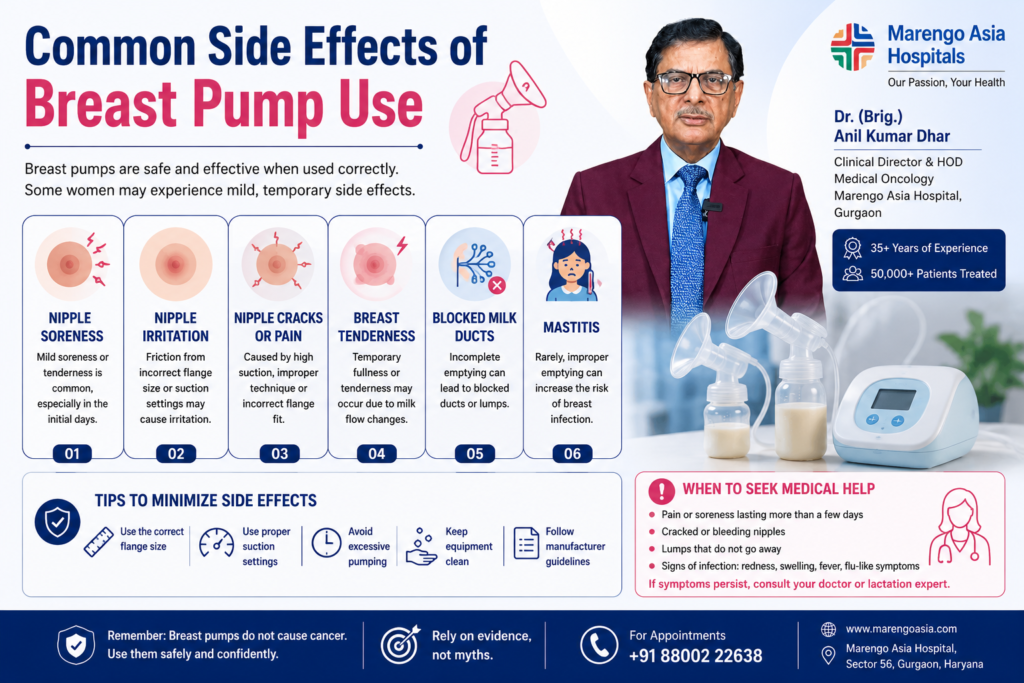
After learning that Can Breast Pump Cause Cancer is a myth, many mothers ask me another important question: “If breast pumps are safe, why do they sometimes cause pain or discomfort?” This is an excellent question because understanding the normal side effects of pumping can prevent unnecessary anxiety. Most symptoms associated with breast pump use are temporary, mild, and easily manageable. They are not signs of breast cancer and should not be mistaken as evidence that Can Breast Pump Cause Cancer is true.
One of the most common side effects is nipple soreness, especially during the first few weeks of breastfeeding or when mothers begin pumping regularly. The nipple tissue is naturally sensitive, and it may take time to adjust to pumping. If the suction is set too high or pumping sessions are too long, soreness can occur. This discomfort usually improves after adjusting the pump settings or ensuring proper positioning. It is important to remember that temporary nipple pain is not an indication that Can Breast Pump Cause Cancer.
Another frequently reported issue is skin irritation around the nipple or areola. Friction from an incorrectly fitted breast shield (flange), excessive suction, or prolonged pumping can lead to redness, dryness, or mild swelling. Fortunately, these symptoms are usually short-lived and heal once the underlying cause is corrected. They do not increase the risk of breast cancer or permanently damage breast tissue.
Many mothers also experience breast tenderness, particularly during the early postpartum period when milk production is becoming established. The breasts may feel heavy, full, or slightly painful before or after pumping. In most cases, this is simply the result of milk filling the ducts or the breasts adjusting to changes in feeding patterns. According to breastfeeding experts, breast engorgement affects nearly two-thirds of breastfeeding women during the first week after delivery, making it a very common and temporary condition.
One of the most overlooked causes of discomfort is an improper flange size. The flange is the funnel-shaped part of the breast pump that fits over the nipple. If it is too small, it can compress the nipple and surrounding tissue, leading to pain and poor milk flow. If it is too large, excessive breast tissue may be pulled into the tunnel, causing unnecessary friction and discomfort. Choosing the correct flange size not only makes pumping more comfortable but also improves milk expression.
Some mothers also worry that pumping means they have a low milk supply. In reality, the amount of milk collected in a pump is not always an accurate measure of milk production. A healthy baby may remove milk more effectively than even the best breast pump. Factors such as stress, dehydration, fatigue, hormonal changes, and incorrect pump settings can temporarily reduce milk output without indicating an actual low milk supply. This often leads mothers to search online for answers, where myths like “Can Breast Pump Cause Cancer” may create unnecessary fear.
So, when are these side effects considered normal? Mild nipple soreness, temporary breast tenderness, slight skin irritation, and occasional discomfort during the first few days of pumping are generally expected and improve with proper technique. However, severe pain, persistent bleeding, fever, worsening redness, pus, or symptoms that continue despite correcting the pumping method should be evaluated by a healthcare professional, as they may indicate an infection or another breast condition requiring treatment.
As a Medical Oncologist, I reassure mothers that these common side effects are part of the breastfeeding journey for many women and should not be confused with breast cancer. The scientific evidence remains clear: Can Breast Pump Cause Cancer is a misconception, not a medical reality. Knowing what is normal—and what is not—helps mothers continue breastfeeding with greater confidence while recognizing when genuine medical attention is needed.
Also Read: What is the ESR Level in Cancer Patients
Breast Conditions That Can Be Mistaken for Cancer
One of the reasons the question “Can Breast Pump Cause Cancer?” creates so much anxiety is that several common breastfeeding-related breast conditions can closely resemble the symptoms of breast cancer. As a Medical Oncologist, I frequently meet women who are alarmed after discovering a lump or experiencing breast pain while breastfeeding. The good news is that most breast lumps in breastfeeding women are benign (non-cancerous) and are often related to milk production rather than cancer. However, it is equally important not to ignore persistent symptoms, which is why understanding these conditions is essential.
A blocked milk duct is one of the most common reasons mothers feel a breast lump. This occurs when milk fails to drain properly from one of the milk ducts, resulting in a small, tender lump. The affected area may feel firm and painful but usually improves with frequent breastfeeding or pumping, gentle massage, warm compresses, and proper breast emptying. Although a blocked duct can be uncomfortable, it does not increase the risk of breast cancer or support the myth that Can Breast Pump Cause Cancer.
Another common condition is mastitis, an inflammation of the breast tissue that may or may not involve a bacterial infection. Studies suggest that 10–20% of breastfeeding mothers experience mastitis, particularly during the first three months after childbirth. Symptoms include breast pain, redness, warmth, swelling, fever, and flu-like illness. Because the breast may become swollen and tender, many women mistakenly believe they have cancer. Fortunately, mastitis usually responds well to antibiotics, continued breastfeeding or pumping, adequate hydration, and rest.
If mastitis is left untreated, it can occasionally progress to a breast abscess. A breast abscess is a collection of pus within the breast tissue that causes severe pain, swelling, redness, and sometimes a fluctuant lump. Unlike breast cancer, an abscess is an infection that typically requires drainage along with antibiotic treatment. Prompt medical care usually leads to complete recovery without long-term complications.
Some women also develop fibrocystic breast changes, a common benign condition affecting millions of women worldwide. These changes can cause lumpy, rope-like breast tissue, tenderness, and discomfort that may fluctuate with hormonal changes. Fibrocystic changes are not cancer, although they can make breast self-examinations more challenging. Similarly, a galactocele—a milk-filled cyst that develops when a milk duct becomes blocked—is another harmless condition seen during or after breastfeeding. Galactoceles are usually painless, soft, and mobile, and many resolve without surgery.
Although these conditions are generally benign, it is important not to dismiss every breast lump as a breastfeeding-related problem. I advise my patients to seek medical evaluation if they notice:
- A breast lump that persists for more than 2–4 weeks
- A lump that does not improve after breastfeeding or pumping
- Bloody nipple discharge
- Skin dimpling or thickening
- Nipple inversion that is new
- Persistent swelling or redness despite antibiotics
- Enlarged lymph nodes in the armpit
- Unexplained weight loss or ongoing breast changes
Remember, asking “Can Breast Pump Cause Cancer?” is understandable, but the evidence remains clear that breast pumps do not cause breast cancer. The real challenge lies in distinguishing normal breastfeeding-related breast conditions from symptoms that require further investigation. As a Medical Oncologist, I always encourage women to seek timely evaluation for any persistent breast changes. Early assessment not only provides reassurance in most cases but also ensures that, if cancer is present, it is diagnosed and treated at the earliest possible stage—when outcomes are significantly better.
Breast Cancer Symptoms You Should Never Ignore
Throughout this article, I have explained that the answer to “Can Breast Pump Cause Cancer?” is no. Scientific evidence clearly shows that breast pumps do not increase the risk of breast cancer. However, while mothers should not worry about pumping causing cancer, they should never ignore persistent breast changes that could indicate an underlying problem. Early detection remains one of the most important factors in successful breast cancer treatment. According to the American Cancer Society, when breast cancer is diagnosed at an early, localized stage, the 5-year relative survival rate exceeds 99%. This highlights why recognizing warning signs is far more important than worrying about the myth that Can Breast Pump Cause Cancer.
The most common symptom of breast cancer is a persistent breast lump. Unlike a blocked milk duct or breast engorgement, a cancerous lump is often firm, irregular in shape, and usually does not disappear after breastfeeding or pumping. While not every breast lump is cancer, any lump that persists for more than two to four weeks should be evaluated by a healthcare professional. This is especially important if the lump continues to grow or feels different from the surrounding breast tissue.
Another warning sign that should never be ignored is bloody nipple discharge, particularly if it occurs from one breast without squeezing the nipple. While infections or benign conditions can occasionally cause discharge, blood-stained discharge may sometimes indicate an underlying breast abnormality, including cancer. Any unexplained bloody discharge requires prompt medical assessment.
Skin dimpling or puckering of the breast is another symptom that deserves immediate attention. Some women describe it as the skin looking like the surface of an orange peel. This happens when a growing tumor pulls on the tissues beneath the skin, causing visible changes. Unlike temporary swelling associated with breastfeeding, skin dimpling usually does not improve on its own.
You should also be alert to changes in the size, shape, or appearance of one breast. A breast that suddenly appears swollen, distorted, or develops nipple inversion without an obvious breastfeeding-related cause should always be examined. Although hormonal changes during pregnancy and lactation naturally affect breast size, persistent or one-sided changes should never be ignored.
Many mothers ask whether pain alone means cancer. The answer is usually no. Most breast cancers are painless in their early stages, and breast pain is more commonly related to hormonal changes, breastfeeding, mastitis, or benign breast conditions. However, persistent pain unrelated to breastfeeding or pumping, especially if it is localized to one area and continues for several weeks, deserves further evaluation. While this does not mean Can Breast Pump Cause Cancer, it does mean the underlying cause should be identified.
Finally, pay attention to swollen lymph nodes, particularly in the armpit or above the collarbone. These glands are part of the body’s immune system and can enlarge due to infections such as mastitis. However, persistent, hard, or painless lymph node swelling may sometimes be associated with breast cancer and should not be overlooked.
As a Medical Oncologist, my advice is simple: do not let myths distract you from the symptoms that truly matter. Instead of worrying whether “Can Breast Pump Cause Cancer?”, focus on monitoring your breast health. If you notice a persistent lump, bloody nipple discharge, skin dimpling, unexplained breast changes, ongoing pain, or swollen lymph nodes, seek medical evaluation without delay. In most cases, these symptoms turn out to be benign, but when breast cancer is detected early, treatment is more effective, less invasive, and associated with significantly better outcomes. Your awareness and timely action can make all the difference.
Does Breastfeeding Reduce Breast Cancer Risk?
After discussing the common concern “Can Breast Pump Cause Cancer?”, it is equally important to highlight a reassuring fact that many mothers are unaware of: breastfeeding itself may actually reduce the risk of developing breast cancer. This is one of the many reasons why healthcare professionals around the world encourage breastfeeding whenever possible. As a Medical Oncologist, I often reassure my patients that while Can Breast Pump Cause Cancer is a myth unsupported by science, breastfeeding offers several proven health benefits for both mother and baby—including long-term protection against certain cancers.
A large body of medical research supports this protective effect. One of the most influential analyses, published by the Collaborative Group on Hormonal Factors in Breast Cancer, reviewed data from 47 epidemiological studies involving nearly 150,000 women across 30 countries. The researchers found that the risk of breast cancer decreases by approximately 4.3% for every 12 months a woman breastfeeds, in addition to the reduction associated with each childbirth. While breastfeeding cannot completely prevent breast cancer, it can contribute to lowering a woman’s lifetime risk, particularly when continued for longer durations.
The World Health Organization (WHO) recommends exclusive breastfeeding for the first six months of a baby’s life, followed by continued breastfeeding alongside complementary foods for up to two years or beyond. These recommendations are primarily intended to improve infant nutrition and immunity, but they also recognize the important health benefits for mothers. Breastfeeding helps the uterus return to its normal size after childbirth, reduces postpartum bleeding, supports healthy weight loss, and lowers the risk of breast cancer, ovarian cancer, and type 2 diabetes later in life.
So, how does breastfeeding help protect the breast? During lactation, hormonal patterns change significantly. Women experience fewer menstrual cycles, leading to reduced lifetime exposure to estrogen, a hormone that can stimulate the growth of certain breast cancers. In addition, breastfeeding causes breast cells to fully mature and naturally shed after lactation ends. This process may help eliminate cells that have accumulated DNA damage before they have the opportunity to develop into cancer. These biological changes explain why breastfeeding is associated with improved long-term breast health.
Some mothers become concerned when they need to use a breast pump and wonder whether doing so changes these benefits. The reassuring answer is no. Whether milk is removed through direct breastfeeding or expressed with a breast pump, the breast continues to undergo the same normal physiological processes involved in lactation. Therefore, using a pump to maintain breastfeeding does not increase cancer risk or negate the protective effects of breastfeeding. The question “Can Breast Pump Cause Cancer?” has been extensively studied, and there is no evidence that pumping interferes with the natural health benefits associated with breastfeeding.
Beyond reducing cancer risk, breastfeeding provides several additional advantages for mothers. It promotes faster postpartum recovery, strengthens the emotional bond between mother and baby, is convenient and cost-effective, and lowers the risk of conditions such as high blood pressure, cardiovascular disease, and osteoporosis later in life. For babies, breast milk offers ideal nutrition and antibodies that help protect against infections, allergies, and several chronic illnesses.
As a Medical Oncologist, I encourage mothers to focus on evidence-based information rather than misconceptions. Instead of worrying whether “Can Breast Pump Cause Cancer?”, understand that breastfeeding—whether directly or with the assistance of a breast pump—is a healthy and natural process with well-documented benefits. While breastfeeding does not guarantee that a woman will never develop breast cancer, it is one of several lifestyle factors that may help reduce risk and support lifelong breast health. Most importantly, continue regular breast self-awareness and seek medical evaluation for any persistent breast changes, regardless of your breastfeeding status.
How to Use a Breast Pump Safely
By now, we’ve established that the answer to “Can Breast Pump Cause Cancer?” is a clear no. Scientific research consistently shows that breast pumps do not increase the risk of breast cancer. However, using a breast pump correctly is essential to ensure comfort, maintain milk supply, and prevent common breastfeeding-related problems. As a Medical Oncologist, I often reassure mothers that while Can Breast Pump Cause Cancer is a myth, improper pumping techniques can lead to temporary discomfort that is easily preventable with the right approach.
The first and perhaps most important step is to choose the correct flange size. The flange, also called the breast shield, is the part of the pump that fits over the nipple. A flange that is too small can compress the nipple, causing pain, friction, and poor milk flow. On the other hand, a flange that is too large may pull excessive breast tissue into the tunnel, resulting in discomfort and inefficient pumping. Most manufacturers offer multiple flange sizes, and selecting the correct fit can significantly improve both comfort and milk expression. Remember, discomfort caused by an ill-fitting flange does not mean Can Breast Pump Cause Cancer—it simply means the equipment needs adjustment.
It is equally important to maintain proper suction settings. Many mothers assume that stronger suction removes more milk, but this is not true. Excessive suction can cause nipple soreness, bruising, and skin irritation without improving milk output. Instead, begin with a low suction level and gradually increase it to a comfortable setting that effectively expresses milk. Pumping should never be painful. If pain persists, reassess the flange size or seek guidance from a lactation consultant.
Keeping the equipment clean is another essential part of safe pumping. The Centers for Disease Control and Prevention (CDC) recommends washing all pump parts that come into contact with breast milk after every use using warm, soapy water or a dishwasher if they are dishwasher-safe. Allow the parts to air dry completely before storage. Proper cleaning helps prevent bacterial contamination and reduces the risk of infections such as mastitis, which can cause breast pain and swelling but is unrelated to the misconception that Can Breast Pump Cause Cancer.
Another common mistake is excessive pumping. Pumping too frequently or for prolonged periods can lead to nipple irritation, breast tenderness, and oversupply issues. Most breastfeeding experts recommend pumping for approximately 15–20 minutes per session, or until the breasts feel comfortably emptied. More pumping is not always better; following a balanced schedule helps protect breast health while maintaining an adequate milk supply.
Finally, always follow the manufacturer’s guidelines for your specific breast pump model. Replace worn-out valves, membranes, tubing, and other accessories as recommended to ensure optimal performance. Every pump is designed differently, and using it according to the manufacturer’s instructions improves both safety and efficiency.
As a Medical Oncologist, my advice is simple: use your breast pump correctly, listen to your body, and don’t let myths create unnecessary fear. The evidence is overwhelming that Can Breast Pump Cause Cancer is not supported by science. A properly used breast pump is a safe and valuable tool that enables mothers to continue providing breast milk while protecting their own health. If you experience persistent pain, bleeding, breast lumps, or symptoms that do not improve despite correct pumping techniques, consult your healthcare provider promptly for further evaluation.
When Should You See a Medical Oncologist?
Throughout this article, I’ve addressed one of the most common concerns among breastfeeding mothers: “Can Breast Pump Cause Cancer?” The medical evidence is clear—breast pumps do not cause breast cancer. However, while you should not worry about using a breast pump, you should never ignore persistent breast symptoms that could require specialist evaluation. Early consultation with a Medical Oncologist or breast specialist can provide reassurance in most cases and, if cancer is present, significantly improve treatment outcomes through early diagnosis.
One of the most important reasons to seek medical attention is if breast symptoms last longer than 2–3 weeks despite appropriate care. Conditions such as blocked milk ducts, breast engorgement, or mild mastitis usually improve within a few days with regular breastfeeding, pumping, and medical treatment when necessary. If your symptoms persist or continue to worsen, further evaluation is essential. Remember, the concern should not be “Can Breast Pump Cause Cancer?” but rather whether your symptoms are resolving as expected.
A persistent breast lump is another reason to consult a specialist. While many lumps during breastfeeding are caused by blocked ducts, galactoceles, or benign cysts, any lump that remains after breastfeeding or pumping, increases in size, or feels firm and irregular should be investigated. Imaging studies and, if required, a biopsy can determine the exact cause. Early evaluation is especially important because breast cancer detected at an early stage has an excellent prognosis.
You should also seek medical advice if you experience recurrent breast infections. Occasional mastitis is relatively common during breastfeeding, but repeated episodes affecting the same area may require further investigation to rule out an underlying breast abnormality. Persistent redness, swelling, fever, or an infection that does not improve with antibiotics should never be ignored.
Women with a strong family history of breast cancer should be particularly vigilant. If your mother, sister, daughter, or multiple close relatives have had breast or ovarian cancer—especially at a young age—you may have an inherited genetic risk. Mutations in genes such as BRCA1 and BRCA2 significantly increase the lifetime risk of breast cancer. In such cases, genetic counseling, risk assessment, and personalized screening plans can help detect cancer early or even prevent it.
Another important reason to consult a Medical Oncologist is abnormal breast imaging. If your mammogram, breast ultrasound, or MRI reveals a suspicious finding, further evaluation is necessary. It is important to remember that most abnormal imaging results are not cancer, but they should always be assessed carefully. Additional imaging or a needle biopsy may be recommended to establish a definitive diagnosis.
Finally, never hesitate to seek a second opinion if you have unanswered questions or uncertainty about your diagnosis or treatment plan. Cancer care often involves complex decisions regarding surgery, chemotherapy, radiation therapy, targeted therapy, or immunotherapy. A second opinion can confirm the diagnosis, provide additional treatment options, and give you greater confidence in your care. Studies have shown that second opinions frequently refine treatment plans and help patients make better-informed decisions without delaying treatment.
As a Medical Oncologist, my advice is to stay informed, not fearful. The evidence consistently shows that “Can Breast Pump Cause Cancer?” is a misconception, not a medical reality. Instead of worrying about breast pumps, focus on recognizing symptoms that truly matter. If you experience a persistent lump, ongoing breast changes, recurrent infections, abnormal imaging findings, or have a significant family history of breast cancer, seek expert evaluation promptly. Early diagnosis saves lives, and timely medical attention remains the most effective step you can take to protect your breast health.
Conclusion: Can Breast Pump Cause Cancer?
After reviewing the scientific evidence and addressing the most common concerns, we can confidently answer the question “Can Breast Pump Cause Cancer?” The answer is no. There is no medical or scientific evidence to suggest that breast pumps cause breast cancer or increase the risk of developing it. Breast pumps are safe devices designed to help mothers express breast milk, support successful breastfeeding, and ensure babies continue to receive the nutritional and immunological benefits of breast milk when direct feeding is not possible.
The misconception surrounding “Can Breast Pump Cause Cancer” often arises because normal breastfeeding-related conditions—such as breast engorgement, blocked milk ducts, mastitis, nipple soreness, or temporary breast tenderness—can cause pain or lumps that understandably worry mothers. However, these conditions are not cancer and, in most cases, improve with proper breastfeeding techniques, appropriate breast pump use, and timely medical care when needed. Understanding the difference between temporary breastfeeding-related changes and genuine warning signs is essential for maintaining both physical and emotional well-being.
Rather than relying on myths circulating on social media or unverified online sources, I encourage every mother to trust evidence-based medical information. Decades of research conducted by organizations such as the World Health Organization (WHO), the American Cancer Society (ACS), and other leading health authorities consistently show that breast pumps are not a risk factor for breast cancer. In fact, breastfeeding itself has been associated with a reduced lifetime risk of breast cancer, offering another important health benefit for mothers.
At the same time, maintaining breast awareness remains an important part of every woman’s health, whether she is breastfeeding or not. Become familiar with the normal look and feel of your breasts, and don’t ignore persistent changes. If you notice a breast lump that does not disappear, bloody nipple discharge, skin dimpling, nipple inversion, unexplained swelling, persistent breast pain unrelated to breastfeeding, or enlarged lymph nodes, seek medical evaluation promptly. While most breast changes during breastfeeding are benign, early assessment ensures that any serious condition is identified without unnecessary delay.
As a Medical Oncologist, I have seen firsthand how early diagnosis transforms outcomes. According to the American Cancer Society, breast cancer detected at an early, localized stage has a 5-year relative survival rate of more than 99%. This is why awareness, timely evaluation, and regular screening for eligible women are far more important than worrying about the myth that “Can Breast Pump Cause Cancer?”
My final message is simple: don’t let fear replace facts. Use your breast pump with confidence, continue breastfeeding whenever possible, and prioritize your breast health through regular self-awareness and timely medical consultations. If you ever notice persistent or unusual breast changes, don’t delay seeking expert advice. Early diagnosis, accurate information, and appropriate treatment remain the strongest tools we have in the fight against breast cancer.
— Dr. (Brig.) Anil Kumar Dhar
Clinical Director & HOD – Medical Oncology, Marengo Asia Hospital, Gurgaon
35+ Years of Experience | 50,000+ Patients Treated

Leave a Reply