




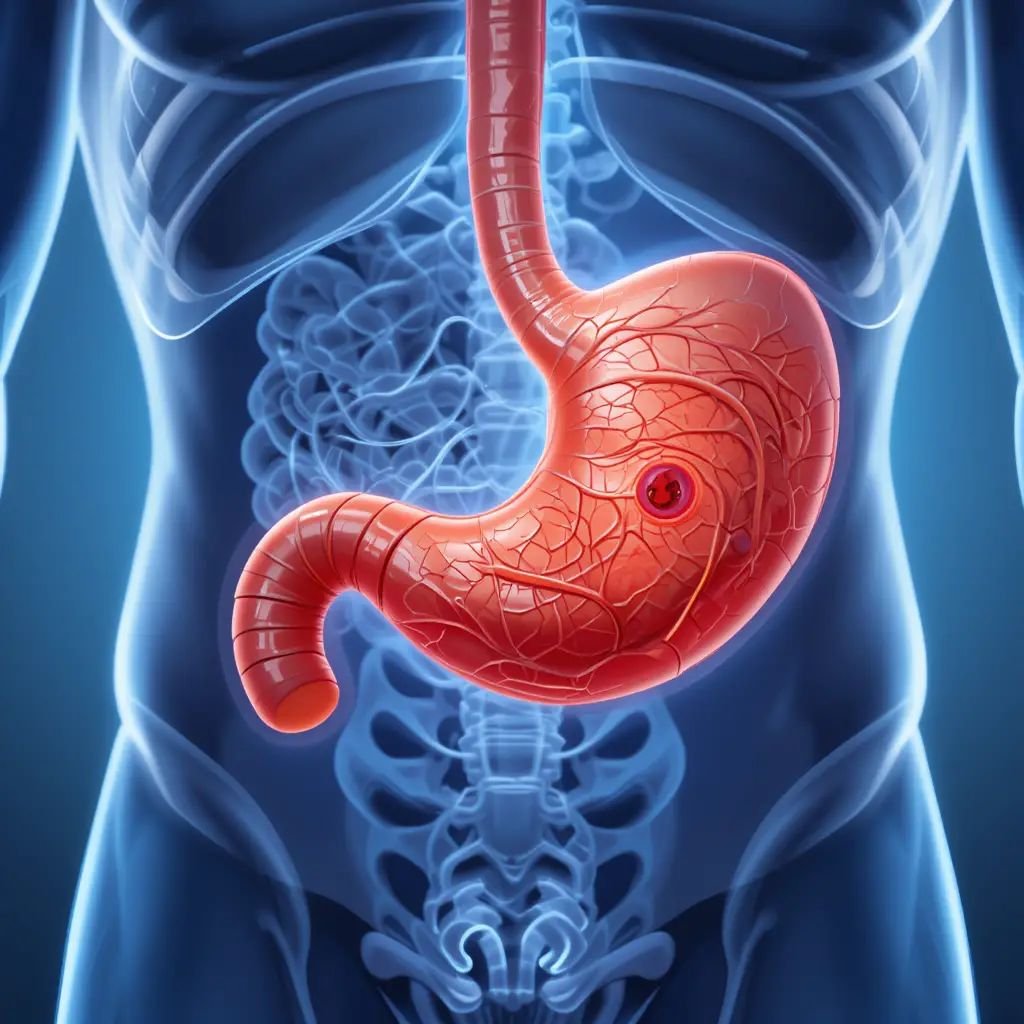
Stomach Cancer
What is Stomach Cancer?
Stomach cancer, also called gastric cancer, develops in the lining of the stomach.
It usually grows slowly over many years and may not cause symptoms in early stages.
The most common type is adenocarcinoma, which starts in the stomach lining.
Risk Factors
Helicobacter pylori (H. pylori) infection
Diet high in salty, smoked, or processed foods
Smoking
Heavy alcohol use
Family history of stomach cancer
Long-term stomach inflammation (gastritis)
Previous stomach surgery
Pernicious anemia
Common Symptoms
Early stages may have no symptoms.
As cancer progresses, symptoms may include:
Persistent stomach pain
Indigestion or heartburn
Feeling full quickly after eating small amounts
Nausea or vomiting
Loss of appetite
Unexplained weight loss
Vomiting blood or black stools (in advanced cases)
Fatigue (due to anemia)
⚠️ Persistent symptoms lasting more than 2–3 weeks should be evaluated by a doctor.
Diagnosis
Upper GI endoscopy
Biopsy (confirmatory test)
CT scan
PET scan
Endoscopic ultrasound
Blood tests
Stages of Stomach Cancer
Stage 1: Limited to inner stomach lining
Stage 2–3: Spread to deeper layers or nearby lymph nodes
Stage 4: Spread to distant organs (liver, lungs, etc.)
Treatment Options
Treatment depends on stage and overall health:
🔹 Surgery
Main treatment for early-stage stomach cancer
🔹 Chemotherapy
Before or after surgery
🔹 Radiation Therapy
🔹 Targeted Therapy
🔹 Immunotherapy
Often, a combination of treatments is used.