




Multiple Myeloma
What is Multiple Myeloma?
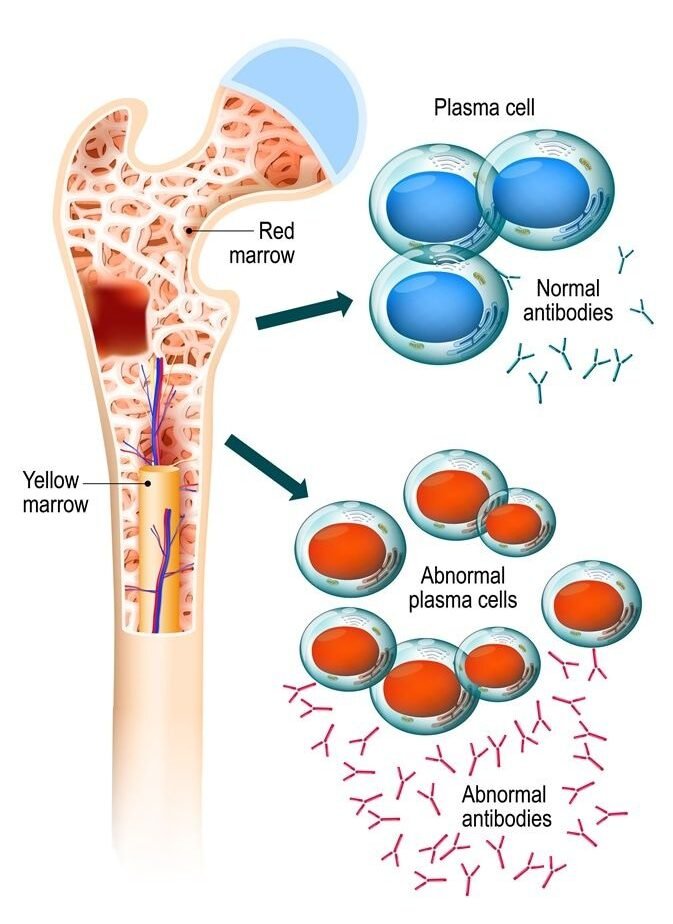
Multiple Myeloma is a type of blood cancer that affects plasma cells, a type of white blood cell found in the bone marrow.
Plasma cells normally help fight infections by producing antibodies. In multiple myeloma, abnormal plasma cells grow uncontrollably and crowd out healthy blood cells.
What Happens in Multiple Myeloma?
Abnormal plasma cells:
Accumulate in bone marrow
Produce abnormal proteins (M-protein)
Damage bones
Affect kidney function
Reduce normal blood cell production
Common Symptoms
Doctors often remember symptoms using the acronym CRAB:
🦴 C – Calcium elevation (high calcium levels)
🩸 R – Renal (kidney) problems
🩸 A – Anemia (low red blood cells, fatigue)
🦴 B – Bone pain or fractures
Other symptoms:
Weakness & fatigue
Frequent infections
Weight loss
Numbness or tingling
Risk Factors
Age above 60 years
Male gender
Family history
Obesity
Exposure to radiation or chemicals
Diagnosis
Blood tests (including serum protein electrophoresis)
Urine test (Bence Jones protein)
Bone marrow biopsy
X-ray / MRI / PET-CT scan
Genetic testing
Stages of Multiple Myeloma
Staging is based on blood test markers and organ involvement.
It is commonly classified into Stage I, II, and III.
Treatment Options
Treatment depends on age, stage, and overall health:
🔹 Targeted Therapy
Drugs that attack cancer cells specifically
🔹 Chemotherapy
🔹 Immunotherapy
🔹 Steroids
🔹 Stem Cell / Bone Marrow Transplant
🔹 Radiation Therapy
Used for bone pain or localized disease