



Colon Cancer
What is Colon Cancer?
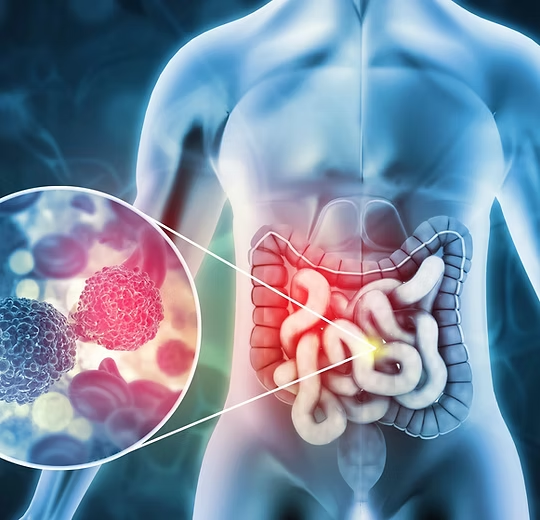
Colon cancer is a type of cancer that starts in the large intestine (colon). It is often grouped with rectal cancer and called colorectal cancer.
Most colon cancers begin as small, non-cancerous growths called polyps, which can slowly turn into cancer over time.
Common Symptoms
Change in bowel habits (diarrhea or constipation lasting more than 2–3 weeks)
Blood in stool (red or black stool)
Abdominal pain or cramping
Unexplained weight loss
Weakness or fatigue
Feeling that the bowel does not empty completely
⚠️ Early-stage colon cancer may not cause symptoms — screening is very important.
Risk Factors
Age above 45–50 years
Family history of colon cancer or polyps
Diet high in red/processed meat
Low-fiber diet
Obesity
Smoking
Alcohol consumption
Inflammatory bowel disease (Crohn’s disease, ulcerative colitis)
Sedentary lifestyle
Diagnosis
Colonoscopy (most important test)
Stool test for blood (FOBT / FIT test)
Biopsy (confirm diagnosis)
CT scan / MRI for staging
Stages of Colon Cancer
Stage 0–1: Early stage (limited to inner lining)
Stage 2–3: Spread to deeper layers or nearby lymph nodes
Stage 4: Spread to distant organs (like liver or lungs)
Treatment Options
Treatment depends on stage:
🔹 Surgery
Main treatment for early-stage colon cancer.
🔹 Chemotherapy
Used after surgery or in advanced stages.
🔹 Targeted Therapy
Used in advanced cancer.
🔹 Immunotherapy
Helpful in certain genetic types of colon cancer.
🔹 Radiation Therapy
More common in rectal cancer than colon cancer.